How to Tell if a Tree Is Dangerous Before It Falls: A Guide for Portland Homeowners
Trees are one of the defining features of Portland’s neighborhoods. From towering Douglas firs to mature maples and oaks, healthy trees add beauty, shade, and value to your property. However, even the strongest trees can become hazardous over time. If a tree is damaged, diseased, or structurally unstable, it can pose a serious risk to your home, vehicles, and family—especially during Portland’s rainy and windy seasons.
Knowing how to recognize the warning signs of a dangerous tree can help you avoid costly property damage and unexpected emergencies. If you notice any of the issues below, it’s time to schedule an inspection with a trusted Portland tree service.
Why Dangerous Trees Are a Concern in Portland
Portland’s climate creates excellent growing conditions for trees, but it also presents unique challenges. Heavy rainfall, saturated soil, strong winter winds, and occasional ice storms can weaken trees over time. Even healthy-looking trees may develop hidden structural problems that increase the risk of falling.
Regular inspections by a professional Portland arborist can identify issues before they become serious safety hazards. Catching problems early often allows homeowners to address them before emergency tree removal becomes necessary.
1. The Tree Is Leaning More Than It Used To
Some trees naturally grow at a slight angle, but a sudden or increasing lean should never be ignored.
A tree that begins leaning after a storm may have experienced root damage or shifting soil beneath the surface. In Portland, prolonged periods of rain can soften the ground, reducing the root system’s ability to support large trees.
If the lean appears to be getting worse or you notice exposed roots, contact a Portland tree removal specialist immediately.
2. Large Dead Branches Are Hanging in the Canopy
Dead limbs are one of the most common signs that a tree may be in decline. These branches can break without warning, especially during periods of high wind or heavy rain.
Large hanging limbs can damage:
- Homes
- Vehicles
- Fences
- Power lines
- Outdoor living areas
Routine tree trimming in Portland helps remove hazardous branches before they become dangerous.
3. The Trunk Has Deep Cracks or Splits
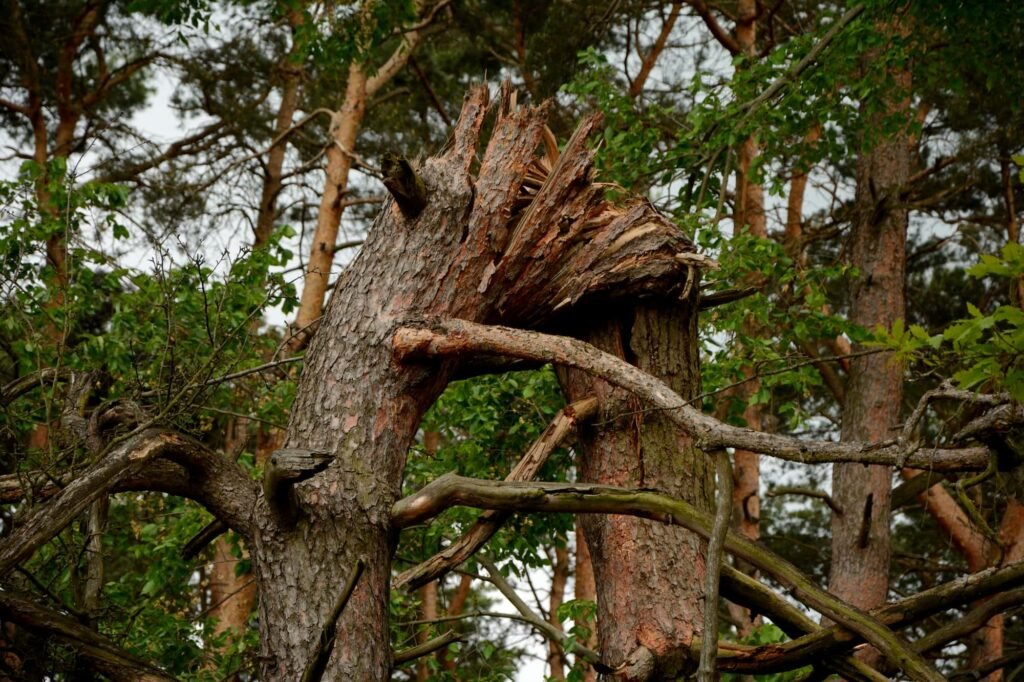
Healthy trees have strong, solid trunks. Large vertical cracks, deep splits, or missing sections of bark often indicate structural weakness.
These defects reduce the tree’s ability to support its own weight and make failure much more likely during severe weather.
If multiple cracks appear or the trunk feels hollow when tapped, it’s important to schedule a professional inspection.
4. Mushrooms Are Growing Around the Base
While mushrooms aren’t always a problem, fungal growth around the base of a tree can signal internal decay.
Fungi feed on decomposing wood, meaning the tree may already be rotting from the inside out. Unfortunately, internal decay isn’t always visible from the exterior.
A certified Portland arborist can determine whether the tree remains structurally sound or if removal is the safest option.
5. The Tree Has Large Dead Sections
A tree with significant dead branches or an entire dead side may no longer be healthy enough to recover.
Signs of decline include:
- Sparse leaves during the growing season
- Brittle branches
- Peeling bark
- No new growth
- Dead limbs throughout the canopy
When a large percentage of the canopy has died, the tree may become increasingly unstable over time.
6. Roots Are Lifting Out of the Ground
Healthy roots anchor a tree securely into the soil. If you notice roots pulling away from the ground or soil lifting around the base of the tree, it may indicate root failure.
This is especially concerning after heavy rainfall or strong windstorms, both of which are common throughout Portland.
Root damage often means the tree is at risk of falling, even if the canopy still appears healthy.
7. Branches Are Touching Your Home or Power Lines
Overgrown trees can become hazardous long before they actually fall.
Branches rubbing against roofs, chimneys, or siding can cause gradual damage, while limbs growing near electrical lines create serious safety risks.
Professional tree trimming services in Portland can safely remove overextended branches while preserving the health of the tree.
8. The Tree Has Been Damaged by Storms
Portland experiences strong windstorms nearly every winter. Even if a tree remains standing after a storm, hidden structural damage may have occurred.
Watch for signs such as:
- Split trunks
- Broken tops
- Hanging branches
- Fresh cracks
- Newly leaning trees
Prompt inspections following severe weather help prevent future failures.
9. You Notice Signs of Disease
Tree diseases often develop slowly, making them difficult to recognize until significant damage has occurred.
Warning signs may include discolored leaves, unusual fungal growth, cankers, excessive insect activity, or branches dying throughout the canopy.
Early diagnosis from an experienced Portland tree service may allow treatment before the tree becomes unsafe.
10. The Tree Simply Doesn't Look Healthy
Sometimes homeowners notice that a tree “just doesn’t look right.” Changes in leaf color, excessive limb loss, poor growth, or an unusually thin canopy can all indicate underlying health problems.
Because many structural defects occur inside the tree, it’s always better to have questionable trees evaluated before they become dangerous.
Professional arborists can assess tree health, identify hidden risks, and recommend the most appropriate solution.
Don't Wait Until a Tree Falls
Many homeowners don’t think about tree safety until a storm causes damage. Unfortunately, waiting until a tree falls often results in expensive repairs and emergency service calls.
Scheduling regular inspections helps identify potential hazards before they become serious problems. Routine maintenance also improves tree health, extends lifespan, and reduces the likelihood of storm-related failures.
A professional tree service in Portland can evaluate your property and recommend pruning, cabling, treatment, or removal depending on the condition of your trees.
Why Choose a Professional Portland Tree Service?
Tree work requires specialized knowledge, equipment, and experience. Attempting to remove hazardous limbs or unstable trees without proper training can be extremely dangerous.
Our experienced team provides comprehensive tree services in Portland, including:
- Tree removal
- Tree trimming and pruning
- Emergency tree removal
- Stump grinding
- Hazardous tree assessments
- Arborist consultations
We understand the unique challenges Portland homeowners face and provide safe, professional solutions designed to protect your property and preserve the health of your landscape.
Schedule a Tree Inspection in Portland Today
If you’ve noticed a leaning tree, dead branches, visible decay, or any other warning signs, don’t wait for the next storm to find out how dangerous it has become.
Our experienced team provides reliable Portland tree removal, professional tree trimming, and expert arborist services throughout the Portland metro area. We’ll carefully inspect your trees, explain our findings, and recommend the safest, most cost-effective solution for your property.
Contact our Portland tree service today to schedule a professional tree inspection and gain peace of mind knowing your home and family are protected.
FAQ's
Q: How do I know if a tree on my Portland property is dangerous?
Common warning signs include a sudden or worsening lean, large dead branches in the canopy, deep trunk cracks or splits, mushrooms growing at the base, roots lifting out of the ground, and visible storm damage. Because many structural defects develop inside the tree, scheduling a professional inspection with a certified Portland arborist is the safest way to assess whether a tree poses a real risk.
Q: Can a tree look healthy but still be dangerous?
Yes. Many of the most serious tree hazards, including internal decay, root failure, and structural weakness are not visible from the outside. A tree may have a full, green canopy while rotting from the inside. This is why regular inspections by an experienced Portland tree service are important, especially after heavy rainfall or windstorms which are common throughout the Portland area.
Q: What should I do if I think a tree on my property is hazardous?
Do not wait for the next storm. Contact a professional Portland tree service as soon as you notice warning signs like leaning, dead sections, fungal growth, or storm damage. A certified arborist will inspect the tree, explain their findings, and recommend the safest solution whether that’s pruning, cabling, treatment, or full tree removal before it becomes an emergency.