Hazardous Tree Removal Services
Hazardous trees can become serious safety threats long before they fully fall. Cracked trunks, unstable roots, storm-damaged limbs, severe decay, and leaning trees all increase the risk of sudden failure, especially during Portland’s wet winters and high-wind storms.
At PDX Tree Service, we provide professional hazardous tree removal services throughout Portland, Milwaukie, and surrounding Oregon communities. Our team safely removes dangerous trees that threaten homes, structures, vehicles, utility lines, and public spaces.
Hazardous tree removals often require specialized planning, technical rigging, climbing expertise, and controlled dismantling methods due to the unstable condition of the tree.
What Makes a Tree Hazardous?
A hazardous tree is any tree with structural instability or health conditions that increase the likelihood of failure and create risk to people or property.
Common hazardous tree conditions include:
- Dead or dying trees
- Severe trunk decay
- Split or cracked trunks
- Hanging or broken limbs
- Root failure
- Trees leaning suddenly
- Storm-damaged trees
- Hollow trees with structural weakness
- Trees damaged by lightning
- Trees growing dangerously near structures or utility lines
In the Pacific Northwest, prolonged moisture exposure and seasonal storms can accelerate tree decline and structural instability over time.
Hazardous Trees Are Common in Portland’s Mature Neighborhoods
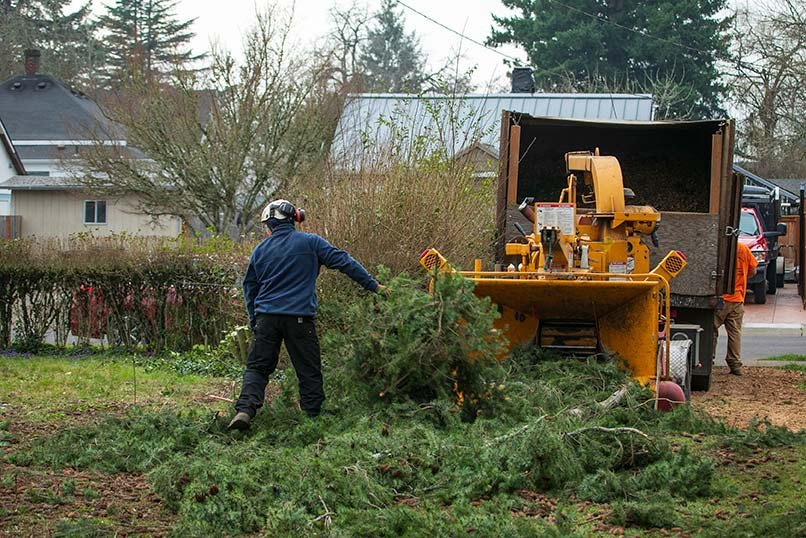
Many neighborhoods throughout Portland and Milwaukie have large mature trees growing close to homes, garages, sidewalks, and streets. While these trees add beauty and value, aging trees can develop hidden risks after decades of exposure to weather and environmental stress.
We commonly remove hazardous:
- Douglas firs
- Cedar trees
- Maple trees
- Pine trees
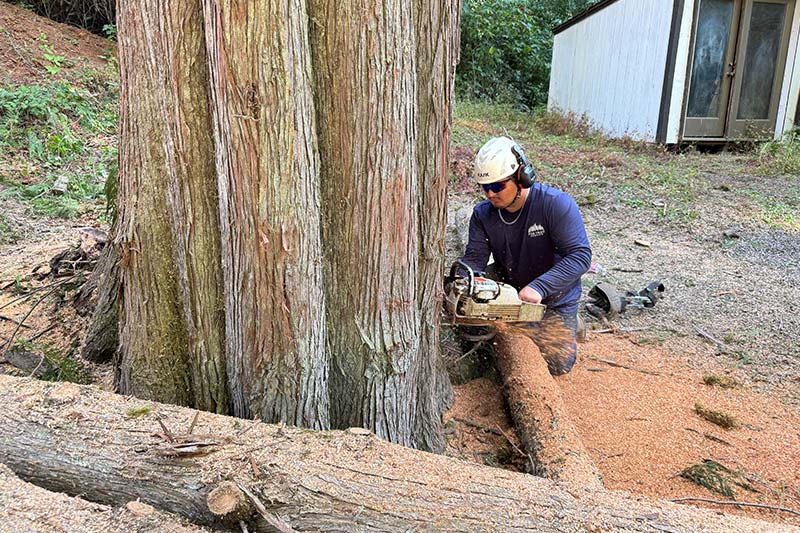
- Multi-trunk trees
- Storm-damaged ornamentals
- Dead standing trees
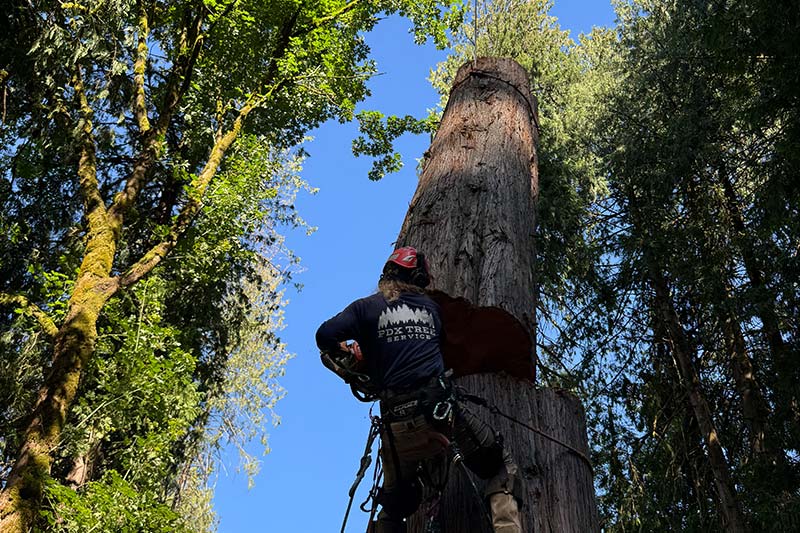
Large trees near structures require especially careful removal planning because unstable limbs or shifting trunks can fail unexpectedly during the process.
Our Hazardous Tree Removal Process
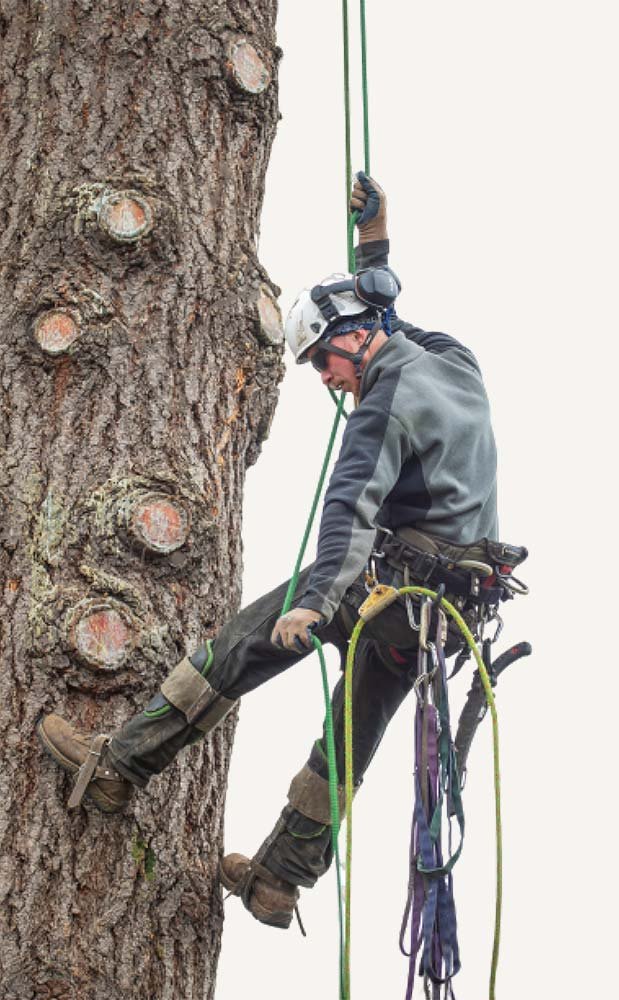
Hazardous removals require a more controlled and safety-focused approach than standard tree removals.
Tree Risk Evaluation
We assess the tree’s structural condition, failure points, surrounding hazards, and safest removal strategy.
Safety Planning
The removal area is carefully planned to protect nearby structures, landscaping, vehicles, and pedestrian access.
Controlled Dismantling
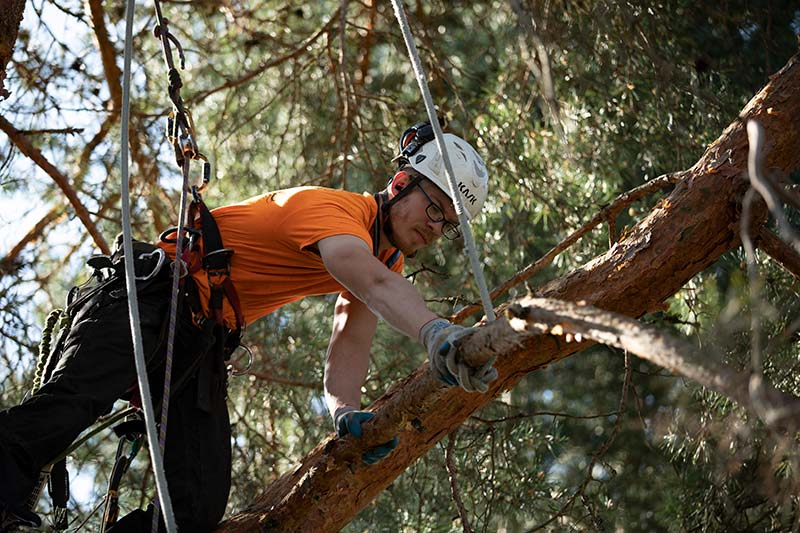
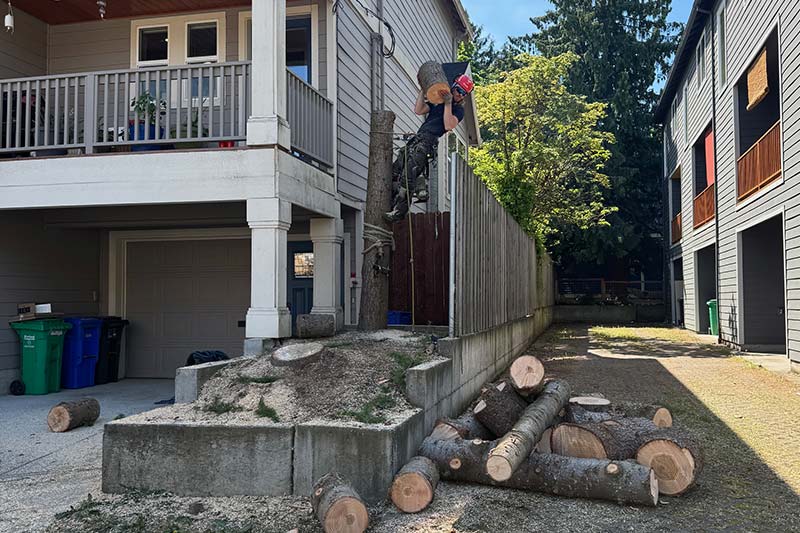
Dangerous sections are removed systematically using rigging, climbing systems, or crane assistance when necessary.
Specialized Equipment Use
Depending on the tree condition and location, removals may involve:
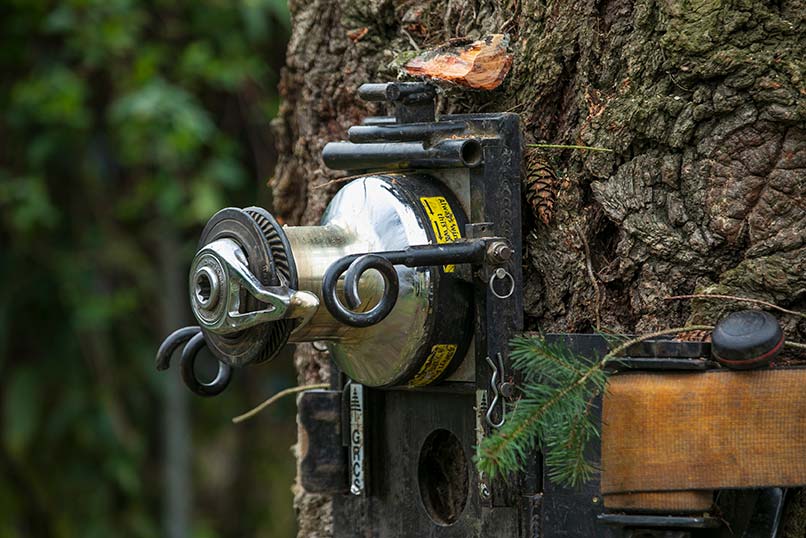
- Rigging systems
- Crane-assisted removal
- Sectional dismantling
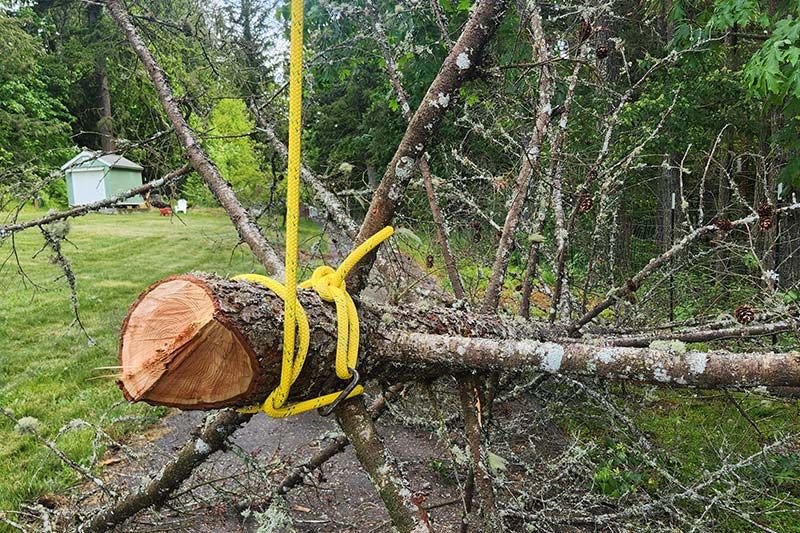
- Roped lowering systems
- Emergency stabilization methods
Cleanup & Debris Removal
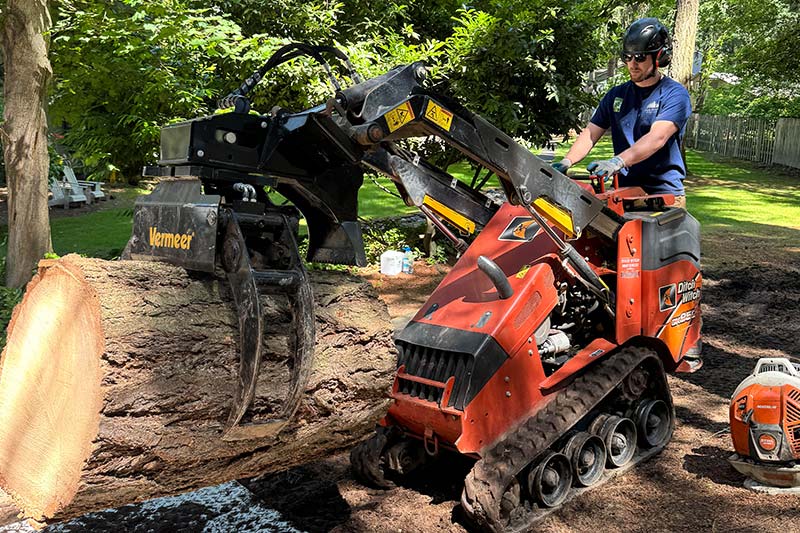
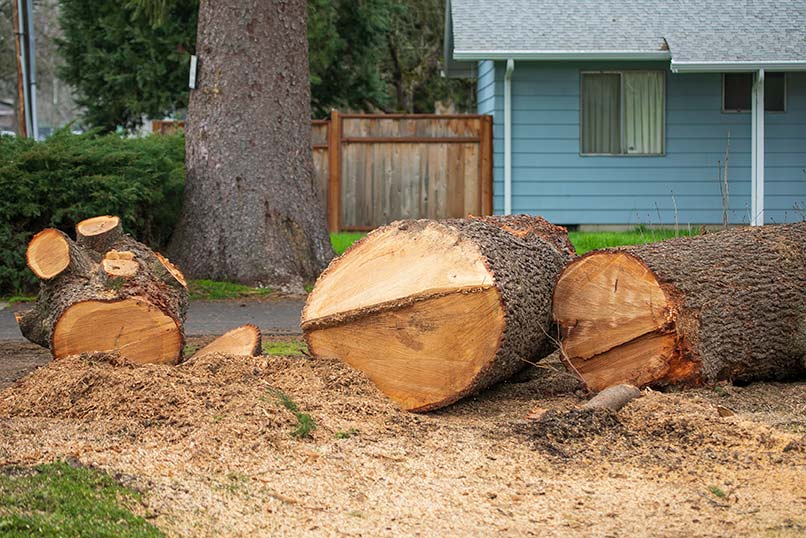
After removal, all limbs, logs, and debris are cleaned from the property.
Emergency Hazardous Tree Removal
Storms can quickly turn weakened trees into immediate emergencies. Wind, saturated soil, and ice accumulation often increase the risk of sudden collapse during Oregon’s winter weather season.
We provide emergency hazardous tree removal for situations involving:
- Fallen trees on homes
- Split or partially collapsed trees
- Dangerous hanging limbs
- Storm-damaged trees
- Blocked driveways or access routes
- Trees threatening structures or vehicles
Fast response becomes especially important when trees continue shifting or deteriorating after storm damage.
Why Hazardous Trees Should Not Be Ignored
Delaying removal of a dangerous tree can increase both safety risks and property damage costs.
Hazardous trees may lead to:
- Roof damage
- Vehicle damage
- Fence destruction
- Utility interruptions
- Personal injury
- Driveway obstruction
- Insurance complications
- Neighboring property damage
Many tree failures happen during periods of heavy wind or saturated ground when structural stress increases rapidly.
Difficult Access & Urban Tree Removal
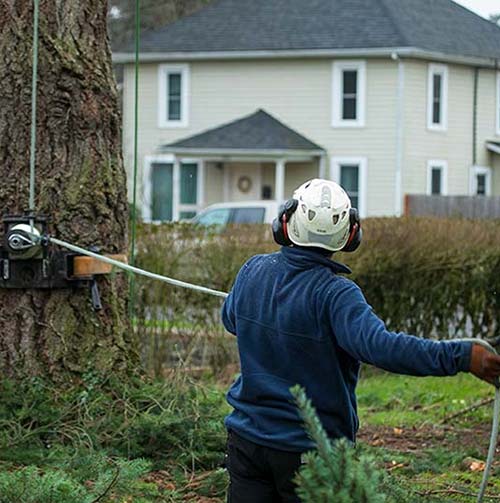
Portland’s dense residential areas often create additional challenges during hazardous removals.
We regularly work around:
- Tight property lines
- Narrow backyard access
- Utility lines
- Fences
- Decks and patios
- Sloped terrain
- Historic homes
- High-traffic areas
Every hazardous removal requires careful coordination to reduce risk throughout the process.
NOT SURE IF YOUR TREE NEEDS TO BE CARE?
Call us at 503-567-4483 to schedule an inspection!
To follow the best course of action for your tree trimming, a professional, on-site analysis is a great place to start. Contact our team now to schedule an inspection & receive an estimate.
Preservation When Possible, Removal When Necessary
Not every damaged tree requires full removal. In some cases, trimming, cabling, or structural support systems may safely preserve part or all of the tree.
However, when a tree becomes structurally unsafe or poses unacceptable risk, removal is often the most responsible solution for protecting people and property.
Our recommendations are always based on safety, long-term practicality, and the actual condition of the tree.
Trusted Hazardous Tree Removal Services in Portland & Milwaukie
Hazardous tree removal requires experience, technical precision, and strong safety awareness. Unstable trees can behave unpredictably during cutting, especially after storms or advanced decay.
At PDX Tree Service, we provide professional hazardous tree removal services focused on safe execution, careful planning, and protection of surrounding property.
Whether you are dealing with a storm-damaged tree, dangerous leaning tree, or severe structural decay, we proudly serve homeowners and businesses throughout Portland, Milwaukie, and nearby Oregon communities.
Reviews
Posted on Google
 Nick Cedarlund
Trustindex verifies that the original source of the review is Google.
Great service. Arrived on time and completed the job quickly. Friendly and proactive with maintenance advice and suggestions.Posted on Google Denise WheelandThe three guy’s that did the job were awesome. Very friendly and worked non stop till the job was finished. They cleaned up everything and it looks like it did before they started. I would highly recommend PDX Tree Service to anyone reading my review.Posted on Google
 Brian FennAnother awesome experience with PDX Tree Service coming out to trim the trees - Japanese Maple Trees , fir trees and more. Ready for them to come back in the fall for the next ones.Posted on Google
 ToonationWe just moved in five months ago, and the trees haven't been touched in 20+ years. Joshua and JP did an amazing job on the six BIG trees and out-of-control bush line alongside the house. Watching Joshua scramble around 50 feet in the air was something else. The trees actually look a lot healthier, and I got a big pile of firewood! Highly recommend!Posted on Google
 Barbara NVery happy with trimming work done on 5 trees. Communication was excellent before and during work. Arrived when they said. Cleaned up nicely afterwards. Employees personable and professional.Posted on Google
 leslie johnsonGreat jump by PDX Tree Service. Removed a very large Douglas Fir in a tight spot. Everything and everyone are all good. PDX came up on Chat GPT as one of the top companies for removing tall trees in tight spaces. I guess AI can be useful.Posted on Google
 David SchlickerOur experience was a very positive one and we recommend PDX tree to everyone.Posted on Google
 E OI got three bids to remove several dead cedar trees, and a neighbor wanted a large fir removed. Josiah showed up on time and spent the time we needed to understand the process. He addressed all our concerns about this precise crane assisted tree removal job that made the job quicker and safer with less impact. I chose PDX Tree Service (my neighbor did too) because of his experience and he was the only one that recommended a reasonably priced cable system on a larger section of my oak tree that if it broke off, would hit my neighbor’s house. Great value add. Sammy in the office was friendly in scheduling and the two climbers Jordan and Brig were very skilled. They left my property cleaner (see pic) than when they got there, which I was not expecting but pleasantly surprised. I’m very happy with the outcome. There are a bunch of tree companies in the area so researching skilled/insured companies is a lot of work and thus the reason I’m adding this positive review to save someone else the trouble of endless researching companies.Posted on Google
 Matthew GrovesI was referred to PDX Tree Service to prune a tree for a solar install and I have become a fan of their work. I ended up adding a few other trees to the request while they were here. Grateful for the answers to my questions to help guide me on the scope of the project. I look forward to using them again in a few years! Update - 3 years later: This family business is still rocking it and super helpful for my arborist needs and continue to do great work as a team. This time around I am managing a more complicated project that needs timely execution to allow other teams to work in succession. It was smooth working with folks that are safety conscious, good note takers, considerate of job site challenges, and super at communicating throughout the process.
FAQ About Hazardous Tree Removal
What is considered a hazardous tree?
A hazardous tree is any tree with structural weakness, decay, storm damage, or instability that increases the risk of failure and potential harm to people or property.
Can a leaning tree be dangerous?
Yes. Sudden leaning, especially after storms or soil movement, may indicate root failure or structural instability and should be professionally evaluated immediately.
Do dead trees need to be removed quickly?
In most cases, yes. Dead trees become increasingly brittle and unstable over time, making them more dangerous during storms and high winds.
Can hazardous trees be removed safely near homes?
Yes. Professional hazardous tree removal uses controlled dismantling, rigging systems, and sometimes crane assistance to safely remove dangerous trees near structures.